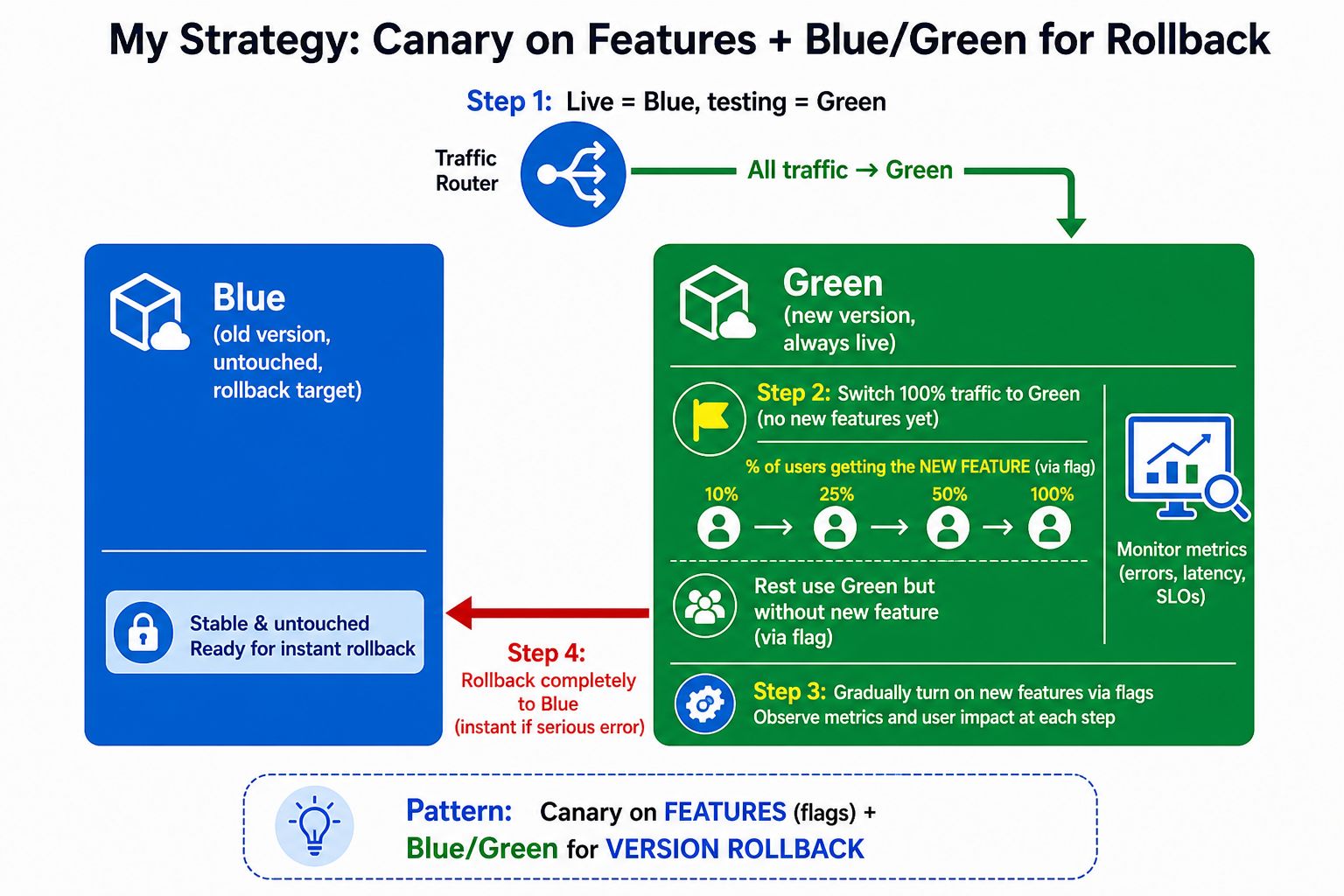
After building my Azure Container Apps demo during AZ-400 prep, I learned that these two strategies are complementary, not competitors.
Canary Deployments:
- Perfect for fast, frequent releases
- Gradual traffic shift (10% → 25% → 50% → 100%)
- Great for catching bugs early through real metrics (error rate, latency, etc.)
- Limits blast radius
Blue/Green Deployments:
- Keep the old version (blue) fully running, untouched
- Deploy the new version (green) alongside it
- Best used as a reliable safety net for instant rollback
The key insight:
Canary is excellent for controlled rollout, but it doesn't fully protect you from unexpected side effects that aren't behind feature flags (database schema changes, auth issues, breaking API contracts, etc.). Even 10% bad traffic can hurt.
That's where Blue/Green shines: it gives you a clean, instant rollback to the untouched previous version.
My current approach: I now design both into my strategy:
→ Use Canary for smart, gradual rollout → Blue/Green = instant version switch + emergency rollback
- Live = Blue, testing = Green
- On rollout: switch 100% traffic to Green immediately (no new features yet)
- Gradually turn on new features on Green via feature flags (10% → 25% → 50% → 100%)
- If something serious breaks, rollback completely to Blue
So:
Canary = gradual feature rollout (via flags) Blue/Green = instant version switch + emergency rollback
This combination gave me much more confidence when deploying to my live website (which is still running the stable blue version).
Have you faced hidden side effects that Canary couldn't handle safely? Do you prefer one over the other, or combine them like I do now?